Shipping out of China, lithium batteries included
Every mode, every export document, and the dangerous-goods paperwork that a battery shipment cannot leave China without — prepared by the same desk that has been booking freight out of China since 2016.
The shipping desk came first. The sourcing desk was added later.
Most sourcing agents buy freight the same way you would: they call a forwarder, take the rate they are given, and pass the bill along. We started on the other side of that counter. The company opened in 2016 as a logistics service agent for DHL and FedEx — moving other companies’ cargo was the original business, years before we bought a single part on anyone’s behalf.
We are still official agents for both networks. That is not a badge on a page: it means your samples, parcels and pallets move on agent rates and agent service levels, to anywhere those networks reach, booked by the same team that negotiated the goods.
In 2018 we became a full buying agent — supplier search and verification, factory-price negotiation, samples, production follow-up, inspection, export services and documentation. Everything we learned about freight came before that, not after. It is the reason shipping is the part of an order we worry about least.
Official agent for both networks — since 2016
Logistics service agent
The business opens handling express and freight for DHL and FedEx. Cargo, customs paperwork and carrier acceptance rules are the day job.
Full buying agent
Sourcing, factory verification, negotiation, samples, production follow-up, inspection and export documentation are built on top of the freight operation.
One team, both jobs
The people who get you the factory’s price also book the shipment, prepare the documents and handle the cargo classes other agents decline.
Four ways your order can travel
The right mode is decided by what the cargo is and when you need it — not by what is easiest to book. Here is how we choose, and what usually justifies each one.
DHL & FedEx, door to door
Booked in-house as agents of both networks. The cargo is collected at the factory or our warehouse and delivered to your address, with clearance handled inside the service for most destinations.
- Samples and pre-production units you need in hand this week
- Replacement parts, urgent top-ups, a few cartons of fast movers
- Small shipments of high value where the freight cost is a rounding error
Airport to airport
For volume that is too heavy to send by courier and too urgent to put on a vessel. Handed to your broker at destination, or delivered onward if you want the door-to-door version.
- A launch date, a season or a promotion you cannot move
- Restocking a fast seller before the sea shipment lands
- Dense, high-value goods — screens, electronics, spare parts
Groupage — you share the container
Your pallets travel with other cargo in a shared container and are separated at destination. The way most first orders and most trial runs should move.
- Order volume that does not come close to filling a container
- Testing a new product line before committing to real quantities
- Bulky goods with no deadline attached
Your own 20ft or 40ft container
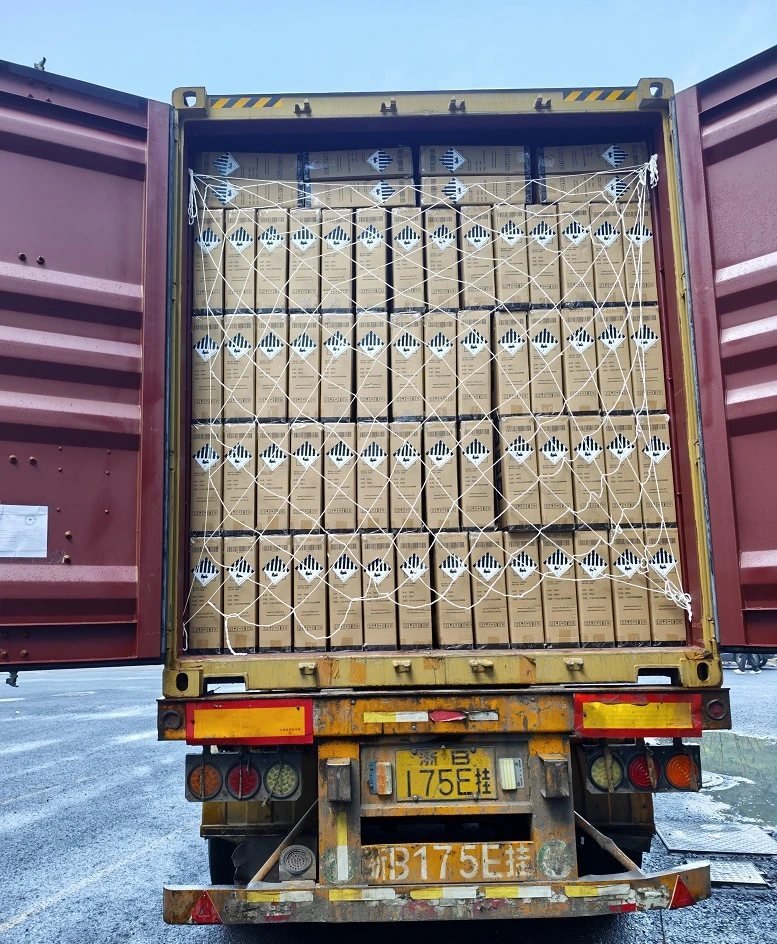
Loaded and sealed at the factory or at our warehouse, and not opened again until it reaches you. The cheapest way to move real volume, and the one with the least handling.
- Volume that fills a container — pools, scooters, machinery, pallets of screens
- Several suppliers consolidated into one shipment
- Cargo you would rather nobody touched twice on the way
- On the stock lines, a full 40’HQ is counted as 68 m³ of stowed cartons — that is the figure the published price scales are built on
Freight is always quoted separately, in writing, before you commit — never folded into the price of the goods and never into our commission.
Certified to ship what most agents quietly decline
A battery shipment does not get rejected at your end. It gets rejected at ours — at collection, at the airline’s acceptance desk, at the port gate — and by then the production run is already paid for and sitting in a warehouse in China.
Lithium cells are classified as dangerous goods. Moving them legally is not a matter of writing batteries on the invoice and hoping. The cargo needs the correct classification, approved packaging, the right marks and labels, a safety data sheet and a dangerous goods declaration prepared by someone trained to prepare it.
Get any part of it wrong and the shipment stops. Ship it undeclared — which is what happens when an agent does not want to lose the order — and it is worse: undeclared lithium is how buyers lose a container, a customer, and a carrier’s willingness to move their freight again.
We hold certification to handle dangerous cargo, so this is classified, packed and declared in-house. Nobody hands your order to a third party who charges for the paperwork and disclaims the risk.
The marks your cargo actually needs. Getting these wrong is why battery shipments sit in a warehouse instead of flying.
Goes on the box when the shipment is declared as fully regulated dangerous goods.
Replaces the Class 9 label when the cells ship under the excepted sections, with a phone number answered in transit.
Added when the package passes passenger-aircraft limits. Loose lithium-ion cells have flown cargo-only since 2016.
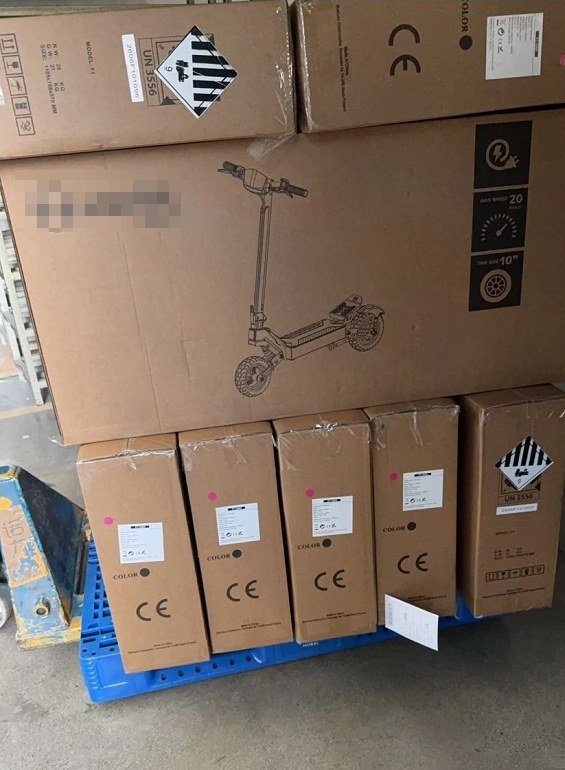
Battery-powered vehicles have no label of their own — a scooter travels under the same Class 9A mark.
Lithium-ion batteries shipped on their own
Loose cells and packs with nothing attached to them: replacement packs, power-bank stock, scooter batteries moving as spares. The strictest of the three, with the tightest limits on how much can travel in one package and on which services will carry it.
Batteries packed with, or built into, equipment
The device and its battery travel together: power tools, consumer electronics, anything that arrives ready to switch on. Easier to move than loose cells, and still dangerous goods — the packing method changes what the declaration says.
Vehicles powered by a lithium-ion battery
Electric scooters and similar rideables ship as vehicles, not as cartons of parts. Handled as its own class, with its own packing and documentation, whether the battery is installed or shipped alongside.
Correct classification, decided before packing
Which entry your cargo actually falls under depends on chemistry, watt-hours and how the battery is packed. That call is made at the factory, not improvised at the airport.
UN-specification packaging
Tested outer packaging, inner protection against short circuit and movement, and the prescribed marks and hazard labels on the outside of every carton.
Safety data sheet for the actual cell
The MSDS or SDS issued for the cell inside your product, plus the cell’s transport test summary where the carrier asks for it — collected from the manufacturer, not written by us.
Dangerous goods declaration
The document that makes the cargo legal to fly or sail, prepared and signed on the shipper’s side, together with the state-of-charge and quantity limits that apply by air.
A lane that will genuinely accept it
Not every service, aircraft or vessel takes every class. We book the route that will carry your cargo instead of discovering the restriction at the acceptance desk.
Told to you before you order
Send the chemistry, the watt-hours and the packing method with your request and you will know what the shipment requires — and what it rules out — before the factory starts production.
What leaves China with your cargo
Your broker will ask for all of it, and any missing line becomes a delay you pay for in storage. It is prepared here, as part of the order.
Commercial invoice
Issued against the order, matching the goods, the values and the terms — the same figures your broker will be checking against the declaration.
Packing list
Cartons, marks, weights, dimensions and contents per box, cross-checked against the quantity actually loaded rather than the quantity ordered.
Certificate of origin
Arranged for the destination’s requirements, including the form your market needs where a trade agreement affects the duty you pay.
MSDS / SDS
For every battery, cell, liquid or chemical in the shipment, obtained from the manufacturer of the item itself.
Dangerous goods declaration
Prepared for the mode you are shipping by, with the packing method and hazard class stated the way the carrier needs to read them.
Export customs clearance
Filed on the China side so the cargo leaves cleanly and the export declaration matches the invoice and packing list your broker receives.
Bill of lading or air waybill
Issued for the mode booked, with the consignee details confirmed with you before release rather than after.
Insurance certificate
Where cargo insurance is arranged, the cover travels with the file — not as something to look for after a claim.
Photo loading report
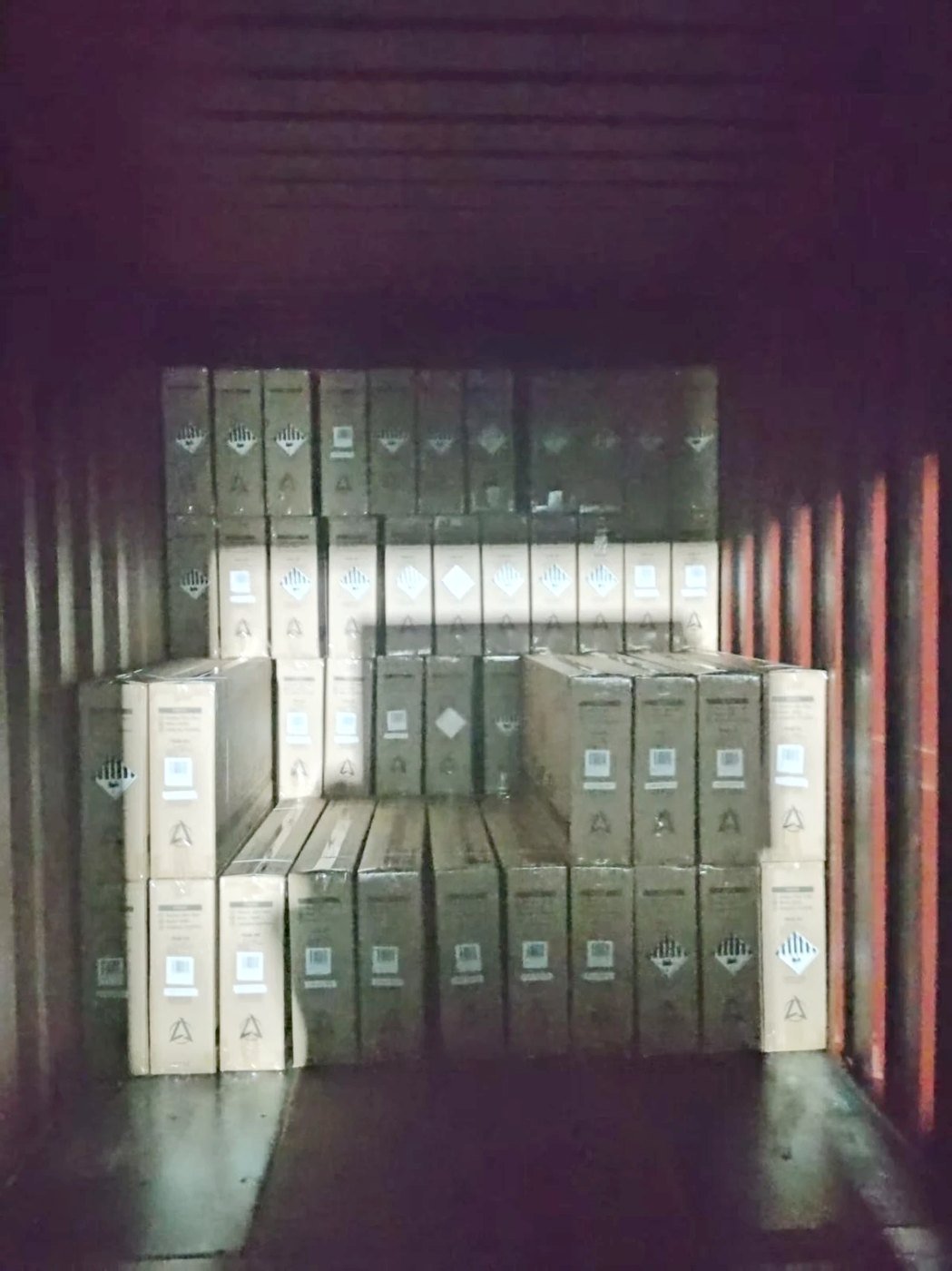
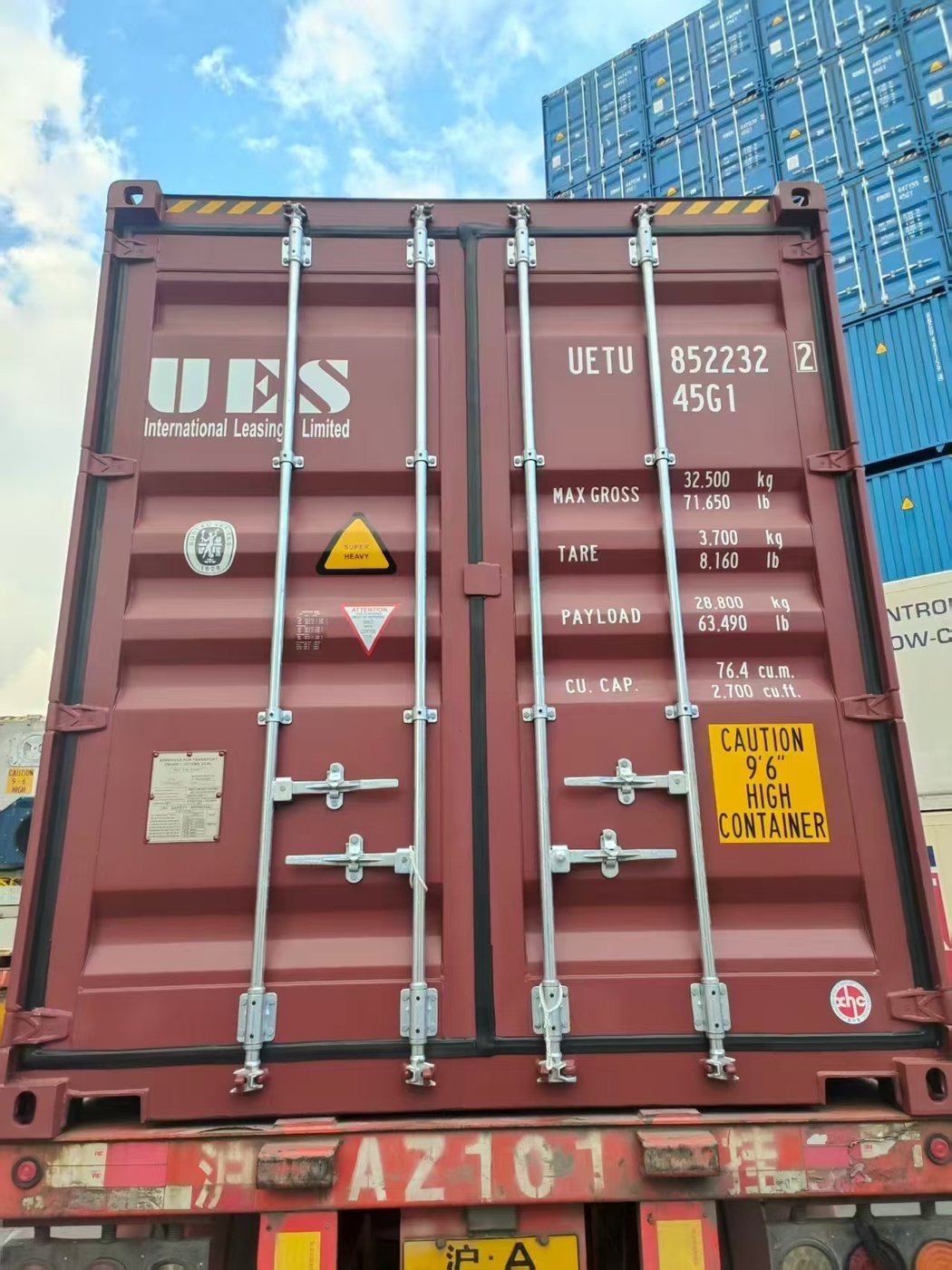
Every container is loaded under supervision and photographed as it fills: the goods, the cartons, the shipping marks and the container itself, dated before the doors are sealed. You see what went in while it is still possible to do something about it — not a set of images staged after the fact.
Several suppliers. One container. One set of documents.
Buying from four factories usually means four shipments, four invoices, four customs entries and four chances for something to go wrong. Our warehouse in China exists so it means one.
Each supplier delivers on its own schedule, and nothing waits for the slowest one to start moving. Your order is assembled here, checked here, labeled here and loaded here.
Five suppliers become one shipment, one customs entry and one reference number to give your broker.
-
01
Everything ships to our warehouse
Each factory delivers when its production is finished, against the order, instead of holding your goods until the last supplier catches up.
-
02
We check what actually arrived
Counts, cartons and condition against the packing list and the spec you approved — while the supplier is still close enough to fix it.
-
03
Labeling and repacking
Barcodes, private label, retail packaging or plain export cartons, plus the shipping marks your warehouse needs to sort the pallets on arrival.
-
04
One loading, one document set
The container is loaded under supervision and photographed, and the whole order ships on a single invoice, packing list and bill of lading.
The parts of the job that happen off the truck
CE, RoHS and FCC
We tell you which marks your market expects for the product you are buying, ask the factory for the test reports it already holds, and arrange third-party testing when it does not have them. Lab work is billed at cost, with the lab’s own invoice.
Cargo insurance
Arranged on request and quoted before you commit, so the value on the water is covered by a policy you chose rather than by an assumption about who pays if a container goes over the side.
Duties and taxes at destination
Import duty and local taxes are yours, and we do not guess at them. What we do is prepare a document set complete enough for your broker to classify and clear the goods without a second round of emails to China.
Before you commit a battery order
Can you ship lithium batteries from China by air?
Yes — when the cargo is correctly classified, packed in approved packaging, marked, labeled, declared and booked on a service that accepts the class. Some battery cargo is better sent by sea, and we will tell you which one yours is before you pay for production rather than after.
Can you ship electric scooters?
Yes. A scooter with its battery installed moves as a vehicle powered by a lithium-ion battery, with its own packing and documentation requirements. Batteries shipped separately as spares are a different class again — tell us which you need and we will quote the shipment accordingly.
Do I need my own freight forwarder?
No. As official DHL and FedEx agents we book express in-house, and we arrange air and sea freight directly. If you already work with a forwarder or your buyer nominates one, we hand over the cargo and the complete document set at origin instead.
What if part of my order is dangerous goods and part is not?
Common, and not a problem. The regulated portion is packed and declared separately, and the order either travels together on a service that accepts the class or splits across modes — whichever costs you less overall. You still get one set of documents.
Who handles customs clearance?
Export clearance in China is ours, filed as part of the order. Import clearance at your end stays with you or your broker, and we supply every document they will ask for so nothing is missing on the day the cargo lands.
Is freight included in your 2–3% commission?
No, and it never hides inside it. Freight is quoted separately in writing, our commission is invoiced separately from the factory’s goods, and you can audit all three documents against each other.
Tell us what is in the box
Product, quantity, destination — and whether there is a battery in it. We come back with the factory’s own quote, our commission itemized separately, and a freight option that will genuinely accept your cargo.